
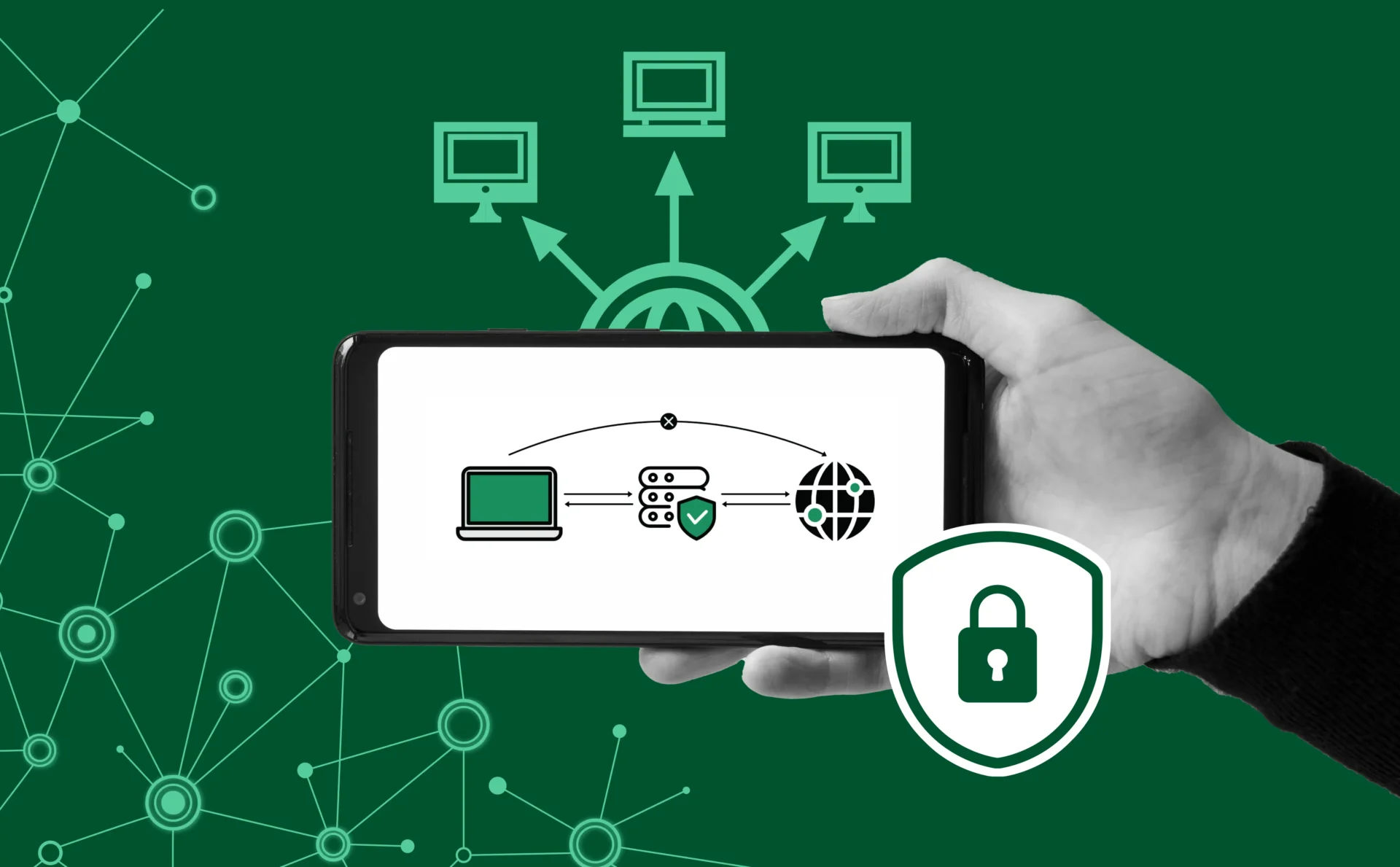
The internet is a vast, interconnected web of servers, data, and digital identities – and somewhere in the middle of every request you make sits something you might not even realize is there. A proxy service acts like a skilled middleman, quietly handling your traffic with precision and purpose. But what exactly does that mean, and why should you care?
Let’s break it all down.
The Core Idea: What Is a Proxy Service, Really?
A proxy service is essentially an intermediary server that sits between your device and the rest of the internet. When you send a request – say, loading a webpage or pulling data from an API – instead of going directly to the destination server, your request first passes through the proxy. The proxy then forwards it on your behalf, receives the response, and delivers it back to you.
Think of it like hiring a personal assistant to pick up your mail. The post office sees your assistant’s name on the package, not yours. The end result is the same – you get your delivery – but the path it took tells a very different story.
This simple architecture unlocks an enormous range of capabilities: privacy, performance, security, data collection, and much more. The proxy isn’t just a tunnel; it’s an intelligent gateway that can filter, cache, modify, and route traffic in ways that would be impossible with a direct connection.
Types of Proxy Services and What Makes Each One Unique
Not all proxy services are built the same. In fact, the differences between proxy types can be dramatic, each suited to entirely different use cases. Here’s a quick overview of the most common categories:
| Proxy Type | Best For | IP Source | Detection Risk |
| Residential Proxy | Web scraping, account management | Real ISP-assigned IPs | Very Low |
| Datacenter Proxy | Speed-sensitive tasks, bulk requests | Data center servers | Medium |
| Mobile Proxy | Social media, mobile-specific platforms | Carrier-assigned IPs | Extremely Low |
| Rotating Proxy | Large-scale automation | Rotates automatically | Low |
| Static Proxy | Long-term sessions, stable identity | Fixed IP address | Low–Medium |
Each type comes with its own trade-offs. Residential proxies, for instance, use IP addresses assigned by real internet service providers to real homes – making them virtually indistinguishable from ordinary users. Datacenter proxies, on the other hand, are fast and cheap but easier for sophisticated platforms to detect. Choosing the right type is less about picking the “best” and more about matching the tool to the task.
Why Businesses Rely Heavily on Proxy Services
Here’s where things get genuinely interesting. While many people associate proxies with individual privacy, the real powerhouse use cases live in the business world. Companies use proxies at massive scale for purposes that are both technical and strategic.
Web scraping is perhaps the most common corporate application. Businesses that need to monitor competitor pricing, track market trends, aggregate real estate listings, or build training datasets for machine learning models can’t do any of that effectively without proxies. Without them, target websites would detect repeated requests from the same IP and block access within minutes.
Brand protection is another major driver. Companies deploy proxy services to monitor how their products are being represented across global markets – checking for counterfeit listings, unauthorized sellers, and regional pricing inconsistencies. This kind of monitoring requires accessing platforms from hundreds of different geographic perspectives simultaneously. A tool like proxys.io offers exactly this kind of infrastructure, giving businesses scalable, reliable proxy access across diverse IP pools.
Ad verification is equally critical. Advertisers need to confirm that their campaigns are actually displaying correctly in different countries, on different devices, and across different networks. Proxy services make this possible by allowing teams to simulate user experiences from virtually any location on the planet.
How Proxy Services Protect Individual Privacy
Every device connected to the internet uses an IP address assigned by an internet service provider.
This IP address can reveal:
- approximate geographic location
- ISP information
- network identity patterns over time
When traffic is routed through a proxy server, the destination website sees the proxy IP address rather than the user’s original IP.
This does not provide absolute anonymity, but it significantly reduces direct exposure of the user’s network identity.
Proxy routing is particularly useful for:
- researchers accessing sensitive datasets
- journalists working in restrictive environments
- developers testing region-specific services
- individuals who prefer additional network separation
If you want a deeper technical explanation of how proxies operate within browser configurations and request routing, the following guide explains the setup process in detail:
https://proxys.io/en/blog/proxy-settings/proxycontrol-browser-extension-for-setup-proxy-server
Common Misconceptions About Proxy Services
A surprising number of myths surround proxy services, and they deserve to be addressed directly.
The biggest misconception is that proxies are inherently shady or illegal. They’re not. Proxies are standard, widely used networking tools deployed every day by Fortune 500 companies, academic institutions, cybersecurity firms, and individual developers. Their legitimacy depends entirely on how they’re used – just like any other technology.
Another common myth is that all proxies are slow. This was largely true in the early days of proxy infrastructure, but modern high-quality proxy providers offer speeds that are more than sufficient for demanding applications. The key is choosing a reputable provider with well-maintained infrastructure.
Finally, some people assume proxies are complex to implement. For basic use cases, most proxy services offer straightforward integration – often just a matter of configuring your browser, application, or script with a host, port, and authentication credentials. You don’t need to be a network engineer to get started.
Choosing the Right Proxy Service for Your Needs
So how do you actually pick a proxy service? The decision comes down to a few critical factors:
- Use case clarity – Are you scraping, testing, managing accounts, or something else entirely? Your use case determines your proxy type.
- IP pool size and diversity – A larger, more geographically diverse IP pool reduces the risk of detection and bans.
- Rotation options – Do you need sticky sessions (same IP for a duration) or fully rotating IPs for every request?
- Speed and uptime – For time-sensitive tasks, latency and reliability matter enormously.
- Ethical sourcing – For residential proxies especially, ensure the provider sources IPs through transparent, consensual networks.
The proxy service market has matured significantly over the past decade. What was once a fragmented landscape of unreliable tools has evolved into a sophisticated industry with enterprise-grade solutions, detailed analytics, and robust customer support. The right partner makes all the difference.
Proxy services are far more than a technical curiosity – they’re foundational infrastructure for modern digital operations. Whether you’re a solo developer building a scraper, a brand manager monitoring global markets, or simply someone who values knowing where their data goes, understanding what a proxy service is and how it works puts you ahead of the curve. The internet runs on information, and proxies help you navigate it on your own terms.